


Yesterday the New York Times reported that Glamour magazine had let go of most of its staff and remains only a shopping click-bait site. I’m way past the age of reading or writing for Glamour, but the news made me sad. It’s not just another example of how magazines have declined in the digital era, it’s also how women’s voices have been quieted in the process.
I’ve always had a love/hate relationship with women’s magazines, although for years most of my income came from writing for them. In college, I wrote about how women’s magazines helped create American consumer culture by creating a lot of unachievable desires—for a particular beauty ideal, for new fashions that were now changing rapidly as never before, for impress-the-guests hostessing, for ideals of feminine comportment. Women’s magazines created problems that never existed before to sell products to solve them—the most appalling example being the creation of Lysol as a douching product to get rid of the smell “down there.”
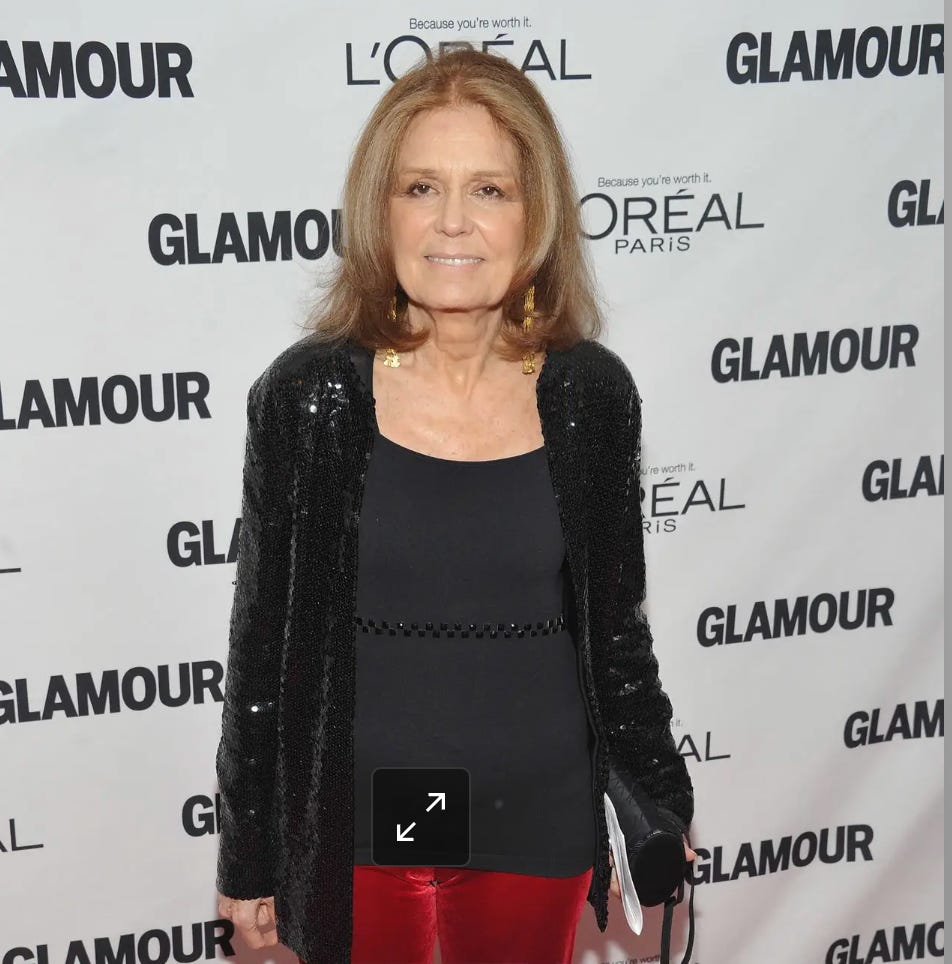
But at the same time, women’s magazines, many of which debuted at the turn of the century (Glamour was 1939), devoted pages and pages to good writing, often by women. For as derided as women’s magazines are for being anti-feminist or pedestrian, it’s hard to come up with the name of a female writer in this century who did not pen articles for them at one time: Gloria Steinem, Joan Didion, Susan Orlean, Ann Patchett, the list goes on and on.
I started writing for Glamour precisely because they were more feminist than the supposedly progressive alternative newspapers I was then writing for. I had written a long exposé of fake abortion clinics for San Francisco’s Bay Guardian, which I based on my suspicion that the people handing out “Pregnant? We’ll help” cards at a pro-choice rally were not offering legit women’s health services. Indeed, when I went to visit with a jar of pee from a friend who was pregnant, I was exposed to a lot of propaganda about how I shouldn’t kill my baby, I’d never be able to get pregnant if I had an abortion, and so forth. I investigated and found that these fake abortion clinics—there were several in San Francisco alone—were owned and operated by a right-wing religious group that was also telling parents of pregnant children that their kid had won a scholarship to Hawaii when instead they placed them with right-wing families who housed them until they had the babies, which the families then adopted. True story.
I pitched the story to an editor at the Bay Guardian, Alan Kay (I mention his name so as not to confuse him with Tim Redmond, who was a later editor and always very supportive of my work), and then wrote it. I wrote it, and the newspaper sat on it. When I asked Kay why they hadn’t run it after several weeks, he answered, “Well, let’s wait until we have a special women’s issue.”
Then the attorney who had helped me with the investigation got tired of waiting for it to appear, and gave the story to the San Francisco Chronicle, which ran it on the front page (not including my story of going undercover). I was about 23 years old, and—previously intimidated by the big, tall and loud editor and publisher of the Guardian, Bruce Brugmann—I marched into his office, slammed the paper on his desk, and said, “You’ve had this fucking story for over a month and you just got scooped.” If there was one thing Brugmann hated, it was getting scooped by the Chron. It was 10 am and Brugmann offered me a drink. They eventually ran my undercover story, but of course, by then the rest of my investigation was old news. Fortunately, the stories resulted in all of the anti-abrtion clinics being shut down in San Francisco, thanks to former Mayor Art Agnos.
Still outraged, I sent the story off to Glamour to see if they’d want to run a national version of the story. They declined, for reasons I can’t remember, but told me to keep in touch. Soon I was writing story after story for them about women’s health—a topic that they took seriously. Plus, they paid 15x per word that the Bay Guardian paid, with none of the abuse. I wrote about body image, reproductive choice, diet scams, botched cosmetic surgery, and a long list of other topics for Glamour, with the encouragement of editors Lisa Bain and Peggy Northrop, who went on to be my editor at Vogue. When Glamour won a National Magazine Award for General Excellence, I had two features in the three issues they submitted; my closest to receiving that award.
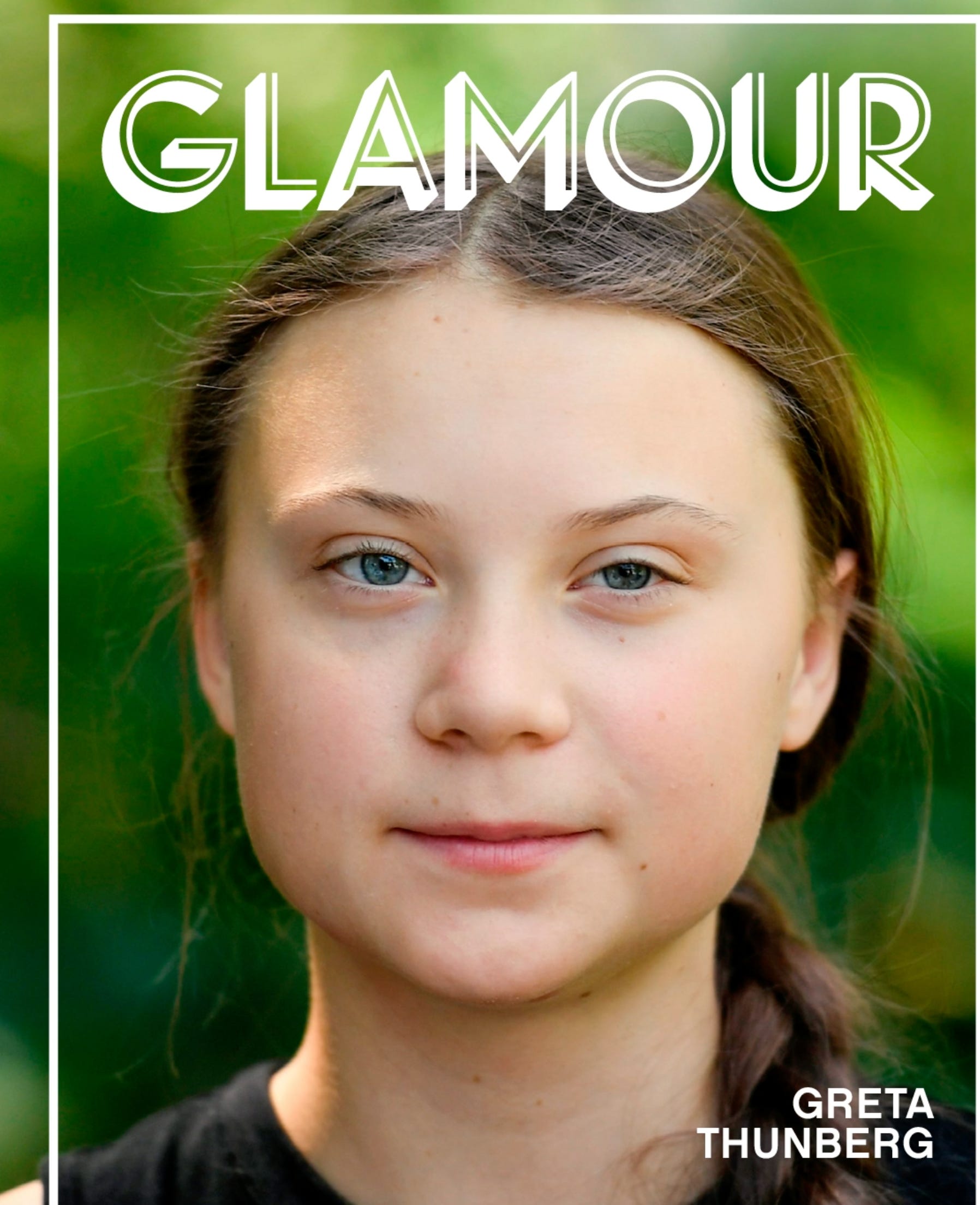
Glamour not only focused on women’s issues, including sexual harassment and pay equity, they spotlighted activist women in the Woman of the Year awards, including Anita Hill, Malala Yousafzai, Greta Thunberg, soccer powerhouse Megan Rapinoe, and countless others.
At Vogue, under Northrop, my stories were even more overtly feminist. I profiled a Stanford brain surgeon who sued for sexual harassment, a female physician who commuted every week by plane to a town that didn’t have providers to perform abortions, a pro-choice referendum in Nevada, and shady diet doctors. Vogue and Glamour, along with the others I wrote for —Elle, Marie Claire, Self, Oprah and everything but Cosmopolitan—were about fashion and make-up, sure, but so much more. I was happy to insert positive messages about body image and women’s reproductive rights into magazines with enormous readerships. And while my mother used to say she wore sunglasses to the grocery store so no one would recognize her buying Vogue, I think those magazines had as much impact on feminism as, say, Ms. or Mother Jones (in fact, when I pitched a health story about the health consequences of leaky silicone breast implants to an editor at Mother Jones, she grilled me for details of my sources, told me “the boys” weren’t likely to go for it, and then turned around and used my sources for a similar piece she wrote herself for Vogue).
Once I pitched a story to Wired magazine, and the editor, who was much younger and less experienced than me, offered me half the going rate because I’d “only written for women’s magazines.” I told him that the editors at women’s magazines had impeccably high standards for research, sources, and journalistic ethics and anyone who regularly wrote features for them could handle a front-of-the-book piece for Wired. Plus, I was teaching magazine writing at UC Berkeley’s Graduate School of Journalism. And unlike Wired, I’d never heard of a women’s magazine who’d had to settle a complaint for unequal pay based on sexual discrimination. So fuck off, dude. (To be fair, in recent years, Wired has been one of the best magazines reporting sexual discrimination in tech).
True, most women’s magazines were often formulaic, with Vogue being a big exception. You’d find a person with some sort of problem, interview three experts about whatever problem she had, and then reveal the solution and end with the woman living happily ever after—as if socioeconomic, medical, and discrimination could be solved as easily as a wardrobe makeover. At a certain point—maybe when I found myself writing about decorating with ottomans for some shelter magazine—I backed away from any but the juiciest features for those magazines.
Times have changed. I used to make 100% of my income writing for magazines, evolving from women’s magazines to Gourmet, Health, and other titles. Now I make about 10% of my significantly lower income writing articles.
The decline of women’s magazines was one of the themes of The Devil Wears Prada 2. The Anna Wintour figure no longer has so much clout. Though I didn’t work with Wintour directly, I’d get notes from her on my manuscripts, and all I can say about her is that she insisted on excellence, and she appreciated good reporting.
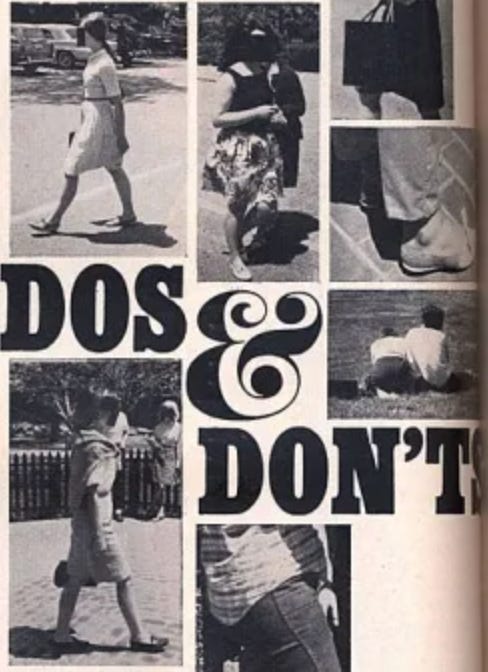
Everything has its moment when time’s up. But I can’t help feeling that the loss of women’s magazines has contributed to the increased misogyny and toxic masculinization of our culture. In a world of Glamour’s “Dos and Don’ts” that’s a big “Don’t.”
I used to love reading Glamour magazine, as a young woman...probably read your articles never realizing I'd be in one of your classes in Mexico one day! I rarely read women's magazines now and only look at Vogue to laugh at the ridiculousness of some of the clothes they make models wear. (Do real humans ever wear those except during the Met Gala?)Thanks for another thoughtful, insightful essay. I always felt the same way you did...and don't get me started on pageants...those drive me insane. Maybe your next post?
All I ever wanted to do as a teenager was work at Mademoiselle.
I ended up decades later as managing editor at Mothering (talk about nightmare bosses! Fraudulent too… and the fashion sense was hemp and the dos and don’t’s? “Do co-sleep till your kid has a drivers license - don’t work outside the home if it means you must pump your milk.” Seriously, Laura, I had a rare lipid condition that made my breastmilk curdle upon refrigeration… obvs Jazzie rejected it. I contacted every LaLeche League I could find and they all told me to quit my job and stay home with the baby. You talk about classist, proto-Trad mom garbage!!! I wanted to write about this for Mothering but Peggy O’M rejected it, saying it would confuse their readers.)
All to say, Glamour it was NOT. God I miss journalism.
This is super sad to hear.